

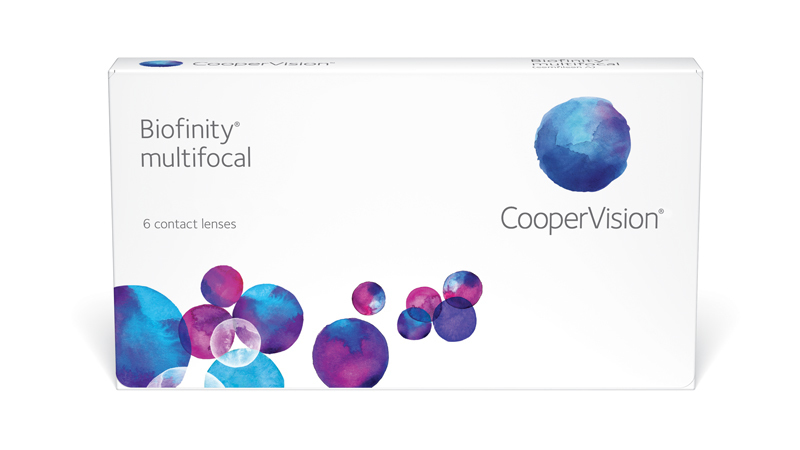
Fitting presbyopic patients just got easier.
New, streamlined fitting process
With the introduction of CooperVision's Biofinity Multifocal, we are also unveiling a new, streamlined fitting process. This new fitting process was developed based on eye care professionals’ real-world fitting experience.
We are confident that it will allow you to fit even more patients with ease and flexibility, delivering excellent vision at any distance.
- Fitting higher ADD powers continues to be flexible, giving you more options for greater accuracy
- Easy to use fitting guide to maximize success with our multifocal lens
Please watch the video below. Dr. Richard Clompus will introduce you to the Biofinity Multifocal and the new, simplified fitting processs. Also, be sure to check out the other tabs for information from your peers ranging from when to have the multifocal conversation to how to manage patient expectations.
- Biofinity Multifocal
- Monovision?
- The MF Conversation
- Tips From The Trenches
- Manage Expectations
- Accom. Correction
Fitting the Biofinity Multifocal
Richard Clompus, OD, FAAO
Watch this video for an introduction to Biofinity Multifocal, as well as to learn about the simplified, 3 step fitting process.
You are missing some Flash content that should appear here! Perhaps your browser cannot display it, or maybe it did not initialize correctly.
Be sure to contact your CooperVision sales representative to start fitting Biofinity Multifocal in your practice!
Don't Put Off a Problem for Tomorrow That Can Be Solved Today
P. Gregory Forsyth, OD
Monovision has been the primary form of correcting presbyopia in contact lenses for the last generation, however we now have a better and more natural way for our patients to regain their near visual function. Multifocal contact lenses are not new, but improvements in lens designs over the last few years now make multifocal contact lenses the best option for this group of patients. There is clinical data that supports that patients prefer multifocal contact lenses over monovision, and just this past year, industry data showed that for the first time more presbyopic fits were in multifocal contact lenses than monovision.*
Multifocal contact lenses give us a more natural way to see the world around us. There have been multiple studies published over the last few years on the comparison of multifocal contact lenses to monovision. No matter which study you look at, all of them show about a 70% patient preference for multifocal contact lenses.*
Monovision can be successful with the emerging or early presbyope due to its ease of transition and decreased lens cost. The theory here is to leave the dominant eye set for distance and to alter the power of the lens on the non-dominant eye to allow for reading. However, as the patient advances in presbyopia, they lose more and more stereopsis. As monovision gets a greater disparity between the distance and near vision in an older presbyope, the lack of stereopsis and the decreased intermediate range of vision becomes a complaint that I hear as a practitioner. If you stay with monovision, the patient will see a reduction in near visual acuity to get the intermediate range for a computer.
Monovision is no longer a viable option in my practice. I like to say that with monovision, "you are putting off a problem for tomorrow that can be solved today." If I put a patient in monovision I may be able to address their vision needs now, but their problems will continue as their condition progresses. My preferred method is to fit a patient in the early stages of presbyopia in Proclear EP. This lens is ideal for patients that have an ADD requirement up to +1.25. The lens is easier to fit than monovision and delivers outstanding near, intermediate and distance vision. As the patient’s condition progresses I will fit them into Proclear Multifocal. Both these lens options give the patient better depth perception than monovision which will be safer for driving and better for sports such as golf and tennis.
AB, a 48 year old female and successful monovision wearer using Biomedics Premier, reported complaints of having trouble seeing her computer monitor at 20 inches. She didn’t like having to get closer to it. AB also said she experienced trouble seeing street signs and driving at night, at dusk and in the rain. It is common for depth perception problems to arise in conditions of low light or low contrast as these.
AB’s current lenses were Biomedics Premier:
8.6 +3.25 20/25 at Near (16 inches)
+0.75 20/25 at Distance - OR +0.25
I refit AB into Proclear Multifocal:
8.7 +1.25/+2.00 N 20/20 at Near (range 16-22 inches)
+1.00/+1.50 D 20/25 at Distance
AB liked the increased depth of focus with the multifocal and felt she saw better for driving. This is due to the distance component present in each lens unlike the monovision she was used to.
In conclusion, the next time a patient presents with symptoms of early presbyopia, instead of continuing with monovision, consider one of the good multifocal options available such as Proclear EP or the Proclear Multifocal. You’ll be happy with the results, and based on the clinical data stated earlier – so will your patients.
Dr. Forsyth is in a group practice in Raleigh, NC where he has practiced for the last 20 years. He does clinical studies for several contact lens companies and is the eye care specialist to the North Carolina State Athletic Department and the Carolina Railhawks men’s professional soccer team.
* Data on file
When to Have the Multifocal Conversation with Your Patient
Jason R. Miller, OD, MBA
Presbyopia is the second most cited reason for contact lens dropout (just behind discomfort) given by the 2.8 million contact lens dropouts every year. A 2008 Harris interactive poll revealed that 83% of respondents were not aware of what Presbyopia was. By embracing the presbyopic population and actively offering them contact lenses to help with their special visual needs, eye-care professionals have an opportunity to distinguish their services, improve practice profitability, cultivate patient loyalty and develop a strong internal referral base.
Choosing Good Candidates!
Like most medical treatment plans, it is important to have patient acceptance of the prescribed plan and multifocal contact lenses are no exception. There are many associating factors to analyze:
- Assess Motivation. Not every patient will be that "Perfect Multifocal Candidate" who has an active lifestyle, wants to remain spectacle-free and presents with blurred near vision out of their current single vision lenses. There are many patients we see on a daily basis who, when offered, could benefit from the improved vision provided by the newer multifocal contact lens designs.
- Assess Visual Needs. Proper identification of occupational and recreational visual needs will enable the eye care professional to customize the design in order to maximize success. Difficult visual demands such as high computer use or high near demand can be overcome with proper patient motivation and education.
There are other times when an "Early Asymptomatic Presbyope" can experience improved distance and near vision with a softer multifocal design. In that case, the eye care professional may need to develop motivation.
Case in Point: A 44 year old female patient with a current -3.00 DS contact lens Rx, has noticed a decrease in distance vision and has a -0.25 over-refraction OU. This increase in Rx may improve distance vision, but will most likely cause symptoms of near blur. She was successfully refit with the Proclear EP -3.25 OU and has improved vision at all distances. The design of Proclear EP incorporates a center distance spherical zone, along with an aspheric intermediate and near zone in the periphery.
Education Dos and Don’ts
- When starting this conversation, DON’T rush. Educate the patient on the presbyopic process and that there is no cure for this vision condition.
- DO educate the patient on their available options and offer your recommendation at the end of the conversation.
- DO educate the patient on the fitting process and expected fees. Patients DON’T like to be surprised when multiple follow-up visits are needed or if the bill is significantly higher than they expected.
- DO develop a "Contact Lens Agreement Form" which explains everything about the fitting process and the proper wearing schedule. This improves patient education and reinforces eye health and safety.
When to Transition
The answer to this question is: It Depends! It depends on many factors including the patient’s presenting symptoms, their refractive changes, their age and sex, their occupational needs and their motivation for change. With better multifocal designs on the market today, fitting patients in multifocal contact lenses is easier than ever.
The best time for change is when you can reduce their dependence on reading, bifocal or multifocal glasses, whether or not they realize they have a vision problem. Simply letting them know that they are a "good candidate" may spark their interest in this new technology and, if the patient is a borderline case, you can at least "set the stage" for their next eye exam. Patients will appreciate your proactive suggestions and so will you as presbyopic patients tend to be the most loyal patients in your practice..
Good luck with future multifocal conversations!
Tips from the Trenches
Mile Brujic, OD
Multifocal contact lenses benefit your patients by allowing them more functionality without the dependency on glasses for near viewing tasks. The benefits to the practice are evident to those who actively fit multifocal contacts because of the added profitability that they offer. Additional revenues are generated from material and fitting fees, and there is also the benefit of referrals from those patients that wear them successfully. Yet some practitioners are not embracing this design as a viable option for their patients.
Today I want to touch on 5 key barriers that may limit successful multifocal contact lens fitting and how to overcome them.
1) Get Passionate about Multifocal Lenses – Demographic information tells us that presbyopes make up one of the largest segments of our practice. If you're not on board now with multifocal lenses you should be.
I've found that, by and large, those practices that have success with multifocal lenses are those practices that have experience fitting the lenses. Those that are successful fitting them will speak very differently about multifocal lenses with their patients because of the successes that they have had fitting previous patients. The catch 22 is that often times without those successes, it is difficult to communicate this technology with passion and with a high level of confidence to patients. My recommendation would be to mention multifocal lenses to everyone who is a candidate. This will get you more comfortable discussing multifocal contact lenses with your patients.
Here is an example of an effective yet easily delivered question that will usually peak a patients interest: “Did you know that there are contact lenses that will allow you to see things up close without the use of glasses? If you are interested, I think that you would be an excellent candidate.” From this simple question and statement, you will be able to gauge your patient's interest. For those that were unaware of the technology, you have now made them aware. For those that are interested, this will likely lead to further questions about these contact lenses. Be certain to discuss multifocal contact lenses with every candidate.
2) Setting Proper Expectations for Your Patients – Further questions from your patients regarding multifocal contact lenses will give you the chance to then describe the way they work in greater detail. Expectations are important because if set incorrectly, it has the chance of potentially leading to a fitting failure.
In discussing the technology with patients, I will always describe multifocal contact lenses as “increasing functional vision and minimizing the use of reading glasses.” This sets the goals very clearly from the start. It is positive in that you are letting the patient know what the contacts will do but yet realistic in its approach. In this way patients will think of the additional tasks that they will be able to perform with their contact lenses without the need for reading glasses including things like viewing a cell phone, computer, reading menus, seeing maps and reading the newspaper, just to name a few.
3) Follow the Fitting Guides – Industry places a significant amount of resources into determining the most successful strategies for selecting the initial diagnostic lenses and then trouble shooting any problems that may arise. There may be the temptation to veer from the guides, but this will often lead a practitioner and patient off of the path of fitting success. Many manufacturers include fitting guides in product literature and/or post them online.
4) Demonstrate Success Immediately – I will initially let the contact lenses settle anywhere from 10 to 20 minutes and then demonstrate success. The way I do this is, before I measure visual acuity, I will have the patient view their cell phone and ask them if they can see it. Before the appointment they likely could not see their cell phone without their reading glasses and now they can. Another task that I have these patients do is look at a computer screen in the exam room that is about 16 to 20 inches away from them. The immediate success that patients will have creates a positive experience with the lenses. I will then measure visual acuities and over-refract using trial lenses.
5) Follow up questions – When patients come in for their follow up visits after 1 to 2 weeks, make sure to ask them what they are satisfied with and what they wish they could improve about their vision. This is an opportunity for the practitioner to re-educate the patient on the benefits and limitations of multifocals. Additionally, this will allow the practitioner and patient to work together to determine whether the powers in the contact lenses could be modified to better meet their needs.
By following these 5 steps you are certain to improve your multifocal fitting success.
Dr. Brujic graduated from the New England College of Optometry. He is currently a partner of a successful four location optometric practice in Northwest Ohio. He practices full scope optometry with special interest in contact lenses and ocular disease management of the anterior segment and glaucoma. He publishes a monthly column in Review of Cornea and Contact Lens and has written in numerous other optometric publications. He is active at all levels of organized optometry.
Managing Patient Expectations with Multifocal Contact Lenses
Jim Winnick, OD, FAAO
Nobody wants to be told they are "getting older." Unfortunately, presbyopia, or "elder eye" is a fact of life that all of us will have to deal with eventually. Fortunately, there are now many excellent ways to compensate for presbyopia. Multifocal contact lenses offer opportunities to address a growing need for visual correction without relying on spectacle or surgical alternatives. Our role as our patients' eye care provider is to have an extensive knowledge of how to fit these lenses as well as set the stage for what they can realistically accomplish.
Our educational approach to solving the patient's problem must offer enthusiastic alternatives to address our patient's needs, but also make it clear from the beginning that there might be compromises. If you promise the world, and don't deliver, you'll have an unhappy patient. If you approach your multifocal contact lens explanation from a practical perspective, you'll "weed out" patients with unrealistic expectations and have a very high success rate of fitting. In my delivery of multifocal contact lenses I always explain that there are two key factors for success: Motivation and Proper Expectations.
Motivation
Motivation comes down to time and money. Most patients don't realize that a successful contact lens fitting is a process. This is especially true with multifocal contact lenses, as small power changes can make big differences in visual performance and the importance of using the lenses in "real world" situations can't be stressed enough. If a patient is unwilling to return for follow-up care and communicate to you regarding how the lens is performing, they are unlikely to be a successful multifocal wearer.
With multiple visits come higher professional fees. There should be appropriate charges associated with the increased time and skill required to fit multifocal lenses. In my discussion of fees with the patient, I tend to quote a global fee for new contact lens wearers. With current contact lens wearers, I quote them the global fee, but explain that I may charge less if the refit goes smoothly. I also quote lens material fees, based on a year supply. Patients appreciate knowing these fees in advance, so that they can make appropriate budget decisions. Nothing will disappoint a patient more than being refit into a multifocal contact lens that they love, but then discovering that they can't afford to buy the lenses. If a patient seems to hesitate at the cost of a multifocal contact lens fit, give them a perspective that they are probably familiar with; progressive glasses. This is an alternative to their presbyopic needs that comes at a similar or greater cost.
Expectations
All presbyopic options have compromises. Whether it's multifocal contact lenses, progressive glasses or surgical alternatives; none of the options for presbyopia can restore our accommodative abilities. I educate patients that a realistic goal is "80% of their day." If the patient can perform 80% of their daily tasks, without reaching for supplemental glasses or a different form of presbyopic correction, then they are a successful multifocal contact lens wearer. Educate them that glasses over their multifocal contacts and/or use of their backup glasses may be preferred for extreme distance tasks such as night driving or extreme near tasks such as medicine bottles or phone books. Multifocal contact lenses should provide comfortable vision for the majority of day-to-day tasks. As fitters, we sometimes attempt to make adjustments to a successful multifocal contact lens system in an effort to address a visual need that is very specific and not undertaken on a regular basis. This can lead to compromising vision at a different distance or task, reducing overall motivation to wear the lens system and resulting in a discontinuation of wearing the lenses all together. Don't underestimate the importance of supplemental or alternative corrections for specific needs. It will result in greater numbers of successful fits for day-to-day use.
Lastly, remind your patients that you are forming a partnership with them to achieve the best possible vision using their multifocal contact lenses. You will provide the professional expertise and product options to address their needs. However, your decision-making will only be as good as their communication of visual needs to you. Teach your patients to be good historians. Encourage them to wear their multifocal contact lenses in as many real life situations as possible. Instruct them to break their world into three general distances: distance (past arms length), intermediate (around arms length) and near (bent arms length and closer). Make them rank the importance of these three distances in their daily life. This will help you prioritize where you can adjust powers for potential compromise and where you can't. If you involve the patient in a "team" approach to solving their presbyopic needs, you will build greater enthusiasm for the positive outcomes and a greater understanding and acceptance of the potential compromises. With this open communication model, you will become a more confident multifocal contact lens fitter, your success rates will increase and your referral rates as a caring and compassionate specialist will grow.
Summary for Success • Educate yourself on multifocal lens options and fitting techniques • Set the stage with your patients for what multifocal lenses can provide – don’t promise the world. • Find motivated patients by explaining the multifocal process upfront. • Set reasonable expectations for your patient. Remember "80% of their day." • Remind your patients that you are forming a partnership with them. Open dialog with a multifocal patient is vital to success • Encourage patients to experience multifocal lenses in real life situations |
Dr. Winnick is a partner in a group practice in Livermore, CA. He practices full scope family practice optometry with special interest in cornea and contact lenses. He has taught contact lens fitting techniques in universities in the U.S. and Europe. He is a Fellow of the American Academy of Optometry and a Diplomate of the Cornea & Contact Lens Section of the Academy.
Accommodative Correction
Charles Allen, OD, FAAO
We are all familiar with the term Computer Vision Syndrome, which became associated with the large numbers of patients that were seen in optometric offices with complaints that centered around their use of computers and the limitation of their related work stations. Special tests were designed to identify the need for lens corrections that were specific for the demands on their eyes in the workplace. Many of these patients were not yet presbyopic but were presenting with vision problems not unlike some pediatric patients that have been labeled as having developmental problems such as Dyslexia, ADD, ADHD or another type of learning disability.
Although vision has always been the principal modality through which children learn to read, the evaluation of a child’s visual capabilities takes a back seat to the attention given to the development of their teeth, which has little or nothing to do directly with learning to read. It is estimated that a majority of preschool children have been to a dentist before they start school, yet only 14% have had a comprehensive examination of their vision. It is not surprising that we see some children in our practices from age eight to 17 that have some type of Accommodative Dysfunction. I have had great success with CooperVision’s Proclear EP, when testing reveals one or more types of these developmental disabilities.
All too often a parent will bring one of their children into my office for an examination of their visual system when they are made aware of the fact that the child is 1 ½ to 2 years behind in reading grade level. After performing tests which measure amplitude of accommodation, accommodative facility, positive relative accommodation (PRA), negative relative accommodation (NRA), and utilized dynamic retinoscopic procedures, you determine that the child will benefit from a bifocal prescription. At that point the parent should be made aware of the benefits of Proclear EP for their child’s condition. They really don’t want to send the child to school with bifocal glasses and for sure the child doesn’t want to be subject to ridicule from their peers.
The design of Proclear EP makes it an excellent choice for the pediatric patient as well as the patient identified with “Computer Vision Syndrome.” These lenses have a center spherical distance zone surrounded by a progressive aspheric zone that provides excellent intermediate (computer distance) and near vision correction up to +1.25 which is frequently sufficient for child and adult alike. One of the things I like best about the lens is how easy it is to fit. The lens is manufactured in omafilcon A material and has a light blue visibility tint which makes the lens comfortable throughout the day and easy to handle, even for children as young as eight years of age.
Over the years I’ve had great success in treating accommodative dysfunction with this lens. It’s a great way to provide a nice alternative to progressive eyeglasses and it’s a great way to help grow and bring value to my practice.

